The Five Sacred Seats of Veerashaivism
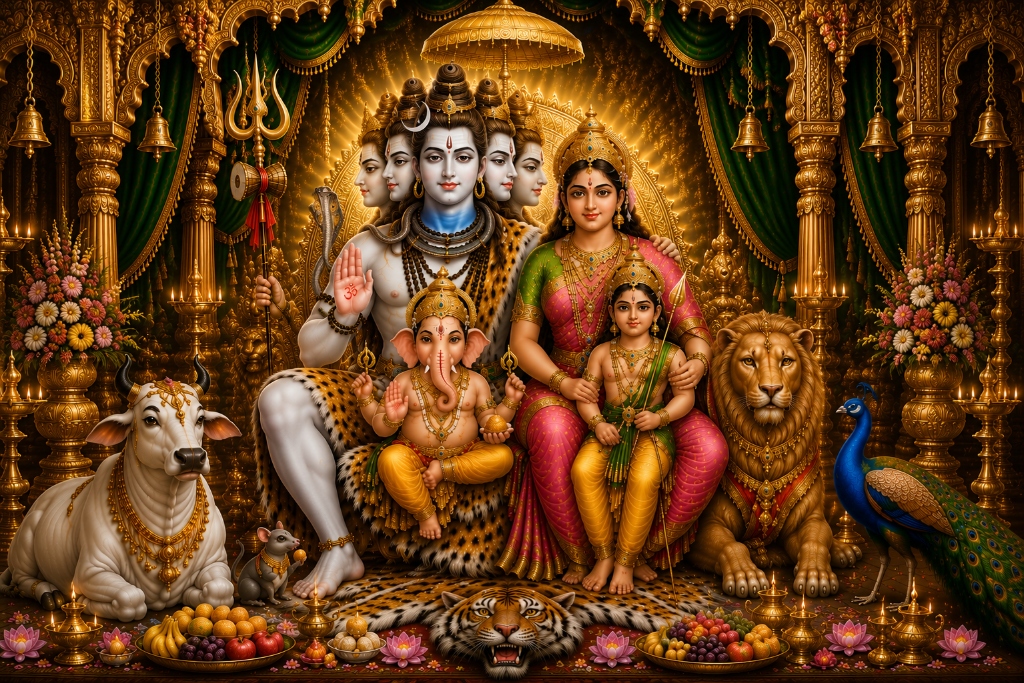
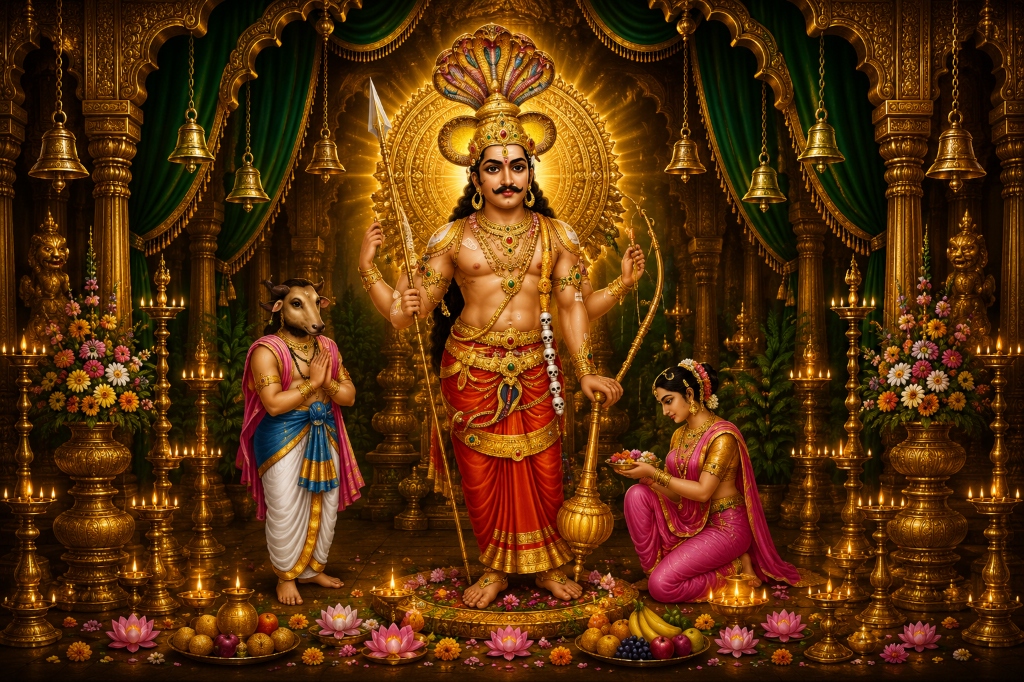
The Pancha Peethas are the five ancient monasteries established by the Panchacharyas — the five founding sages who emerged from the five faces of Lord Shiva to propagate the Veerashaiva faith.
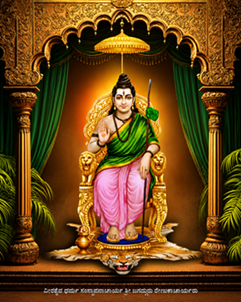
Veera Simhasana Peeta
Rambhapuri
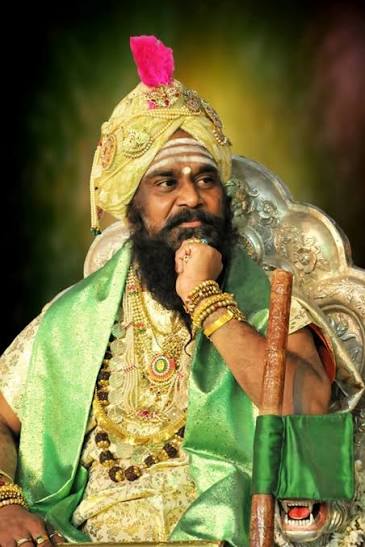
Founded by Jagadguru Renukacharya
🔱 Someshvara Linga
📍 Balehonnur, Chikkamagaluru
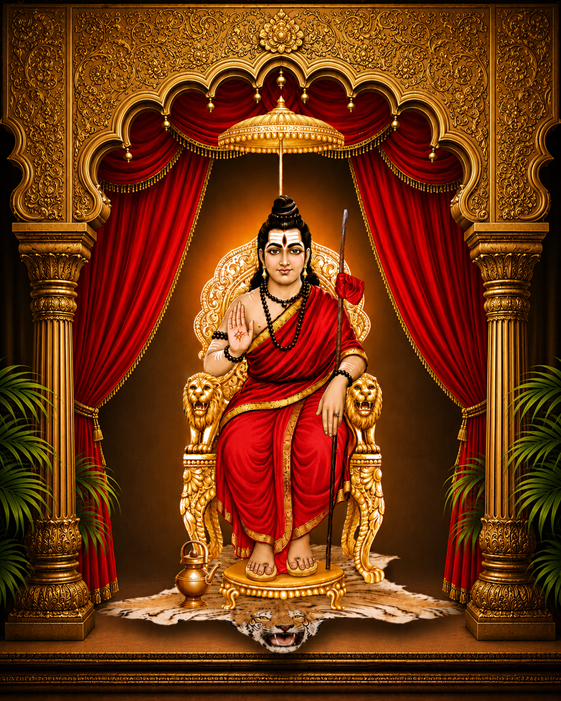
Saddharma Simhasana Peeta
Ujjaini

Founded by Jagadguru Marulasiddheshwara (Darukacharya)
🔱 Siddheshvara Linga
📍 Ujjaini, Kudligi Taluk, Vijayanagara District
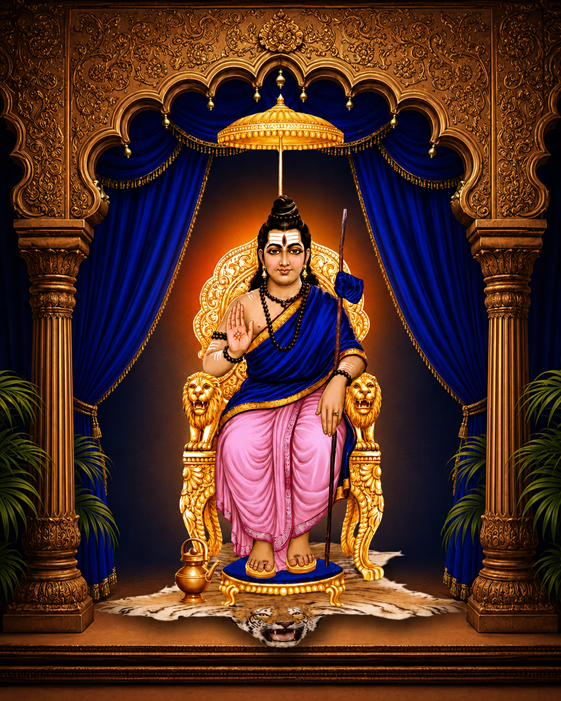
Vairagya Simhasana Peeta
Kedara

Founded by Jagadguru Ekoramaradhya
🔱 Kedara Linga
📍 Kedarnath, Uttarakhand
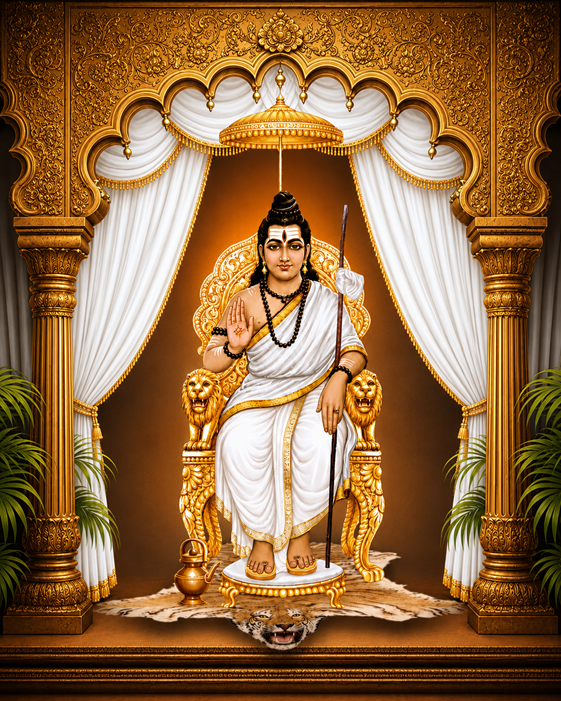
Surya Simhasana Peeta
Srisaila

Founded by Jagadguru Panditaradhya
🔱 Mallikarjuna Linga
📍 Srisailam, Nallamala Hills, Nandyal District
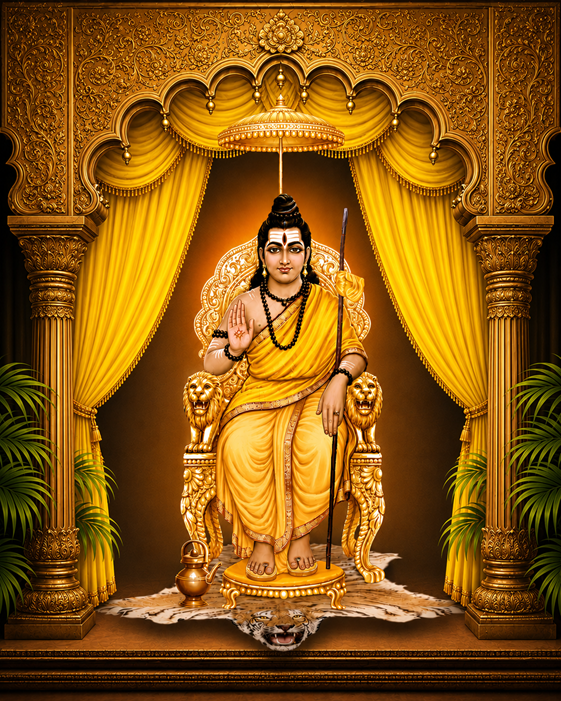
Jnana Simhasana Peeta
Kashi

Founded by Jagadguru Vishwaradhya
🔱 Vishveshvara Linga
📍 Varanasi (Kashi)
Panchapeetas
In the sacred land of India, the fundamental purpose of every religion's origin has been to develop and refine the culture of its people — not to distort it. While Dharma speaks of ideals, culture reveals the reality of how life truly is. Dharma is the lifeblood of human existence; true practice alone earns the name of Dharma. Dharma is that which grants fulfillment in both this world and the hereafter. Spiritual inclination and righteous conduct form the cornerstone of Dharmic achievement — thus the Upanishads have proclaimed: "Dharmam Chara" (Practice Dharma).
Wealth and desires severed from Dharma cannot bear fruit. Only when they grow within the framework of Dharma does true welfare and well-being become attainable. It is the task of Dharma to correct life, to make existence pleasant, and to sanctify living. Who would not want such a Dharma filled with noble ideals? The glory of Veerashaivism lies in having taught the ten principles of Dharma — from non-violence to meditation.
Even a blind person needs a walking stick to move forward; without it, progress is impossible. It is the Guru's compassionate nectar that guides even the blind through the subtle, sensitive inner strength of the Guru's soul. Likewise, the light of the Guru's teachings is absolutely essential to cross the ocean of worldly existence. To understand this, the Veerashaiva philosophy proclaims duality in practice and non-duality (unity with Shiva) in its ultimate goal. The credit for declaring that the elevation of life is possible through the practice of knowledge and action belongs to Veerashaiva Dharma.
The most ancient Veerashaiva Dharma is historically renowned. The five primordial Jagadgurus — the Panchacharyas — elevated Indian culture to the highest position by establishing the Veerashaiva Dharma. Comprising an integral combination of devotion, knowledge, and action, the Veerashaiva Dharma embodies the loftiest ideals. The honor of bestowing such an invaluable Dharma upon the nation belongs to Sri Jagadguru Renuka and the other Panchacharyas. Thus, the Panchacharyas hold the foremost place in Veerashaiva religious and philosophical history.
Veerashaiva Dharma acknowledges that Parashiva — the Lord of the Universe, the Creator, and the Destroyer; the Lord of Kailasa, Consort of Girija, Wearer of the Elephant Hide — possesses five divine faces. These are: Sadyojata, Vamadeva, Aghora, Tatpurusha, and Ishana. From each of these five faces, in different ages, the Panchacharyas incarnated under different sacred names. Having emerged from the Lingas, these Acharyas assumed the Jangama (mobile/wandering) form and dispelled the afflictions of the world. The history of their supreme Pancha Peethas — from their ancient origins to the present day — can be briefly surveyed here.
As commanded by Parashiva, the primal Acharyas who manifested from His five faces appeared at various sacred kshetras on earth, as described in the Shivagamas.
Siddhantakhye mahatantre kamikade shivodite |
Nirdishtamuttara bhage veerashaiva matam param ॥
In the great tantra known as Siddhanta, revealed by Shiva beginning with the Kamika,
In its concluding part, the supreme Veerashaiva doctrine has been expounded.
— Siddhanta Shikhamani
Sri Jagadguru Rambhapuri Veera Simhasana Mahasamsthana Peetha
Sri Jagadguru Renukacharya, who manifested from Parashiva's first face — the Sadyojata — established the Sri Jagadguru Rambhapuri Veera Simhasana Mahasamsthana Peetha on the banks of the Bhadra River in the Malayachala region of Chikkamagaluru district, Karnataka. He granted Linga Diksha to the great sage Agastya and enlightened him with the Shaktivishishtadvaita Siddhanta — the divine nectar of Shiva's message — and uplifted him. The word 'Veera' forms the first part of 'Veerashaiva Dharma,' signifying mastery in knowledge, heroic conduct, and the special meaning of Shiva-Jiva unity. The glory of Sri Peetha lies in having waged a crusade of Dharma against Adharma and sounding the trumpet of righteousness. Sanctified by the sacred feet of one hundred and twenty-one Paramacharyas to date, the Peetha has been bestowing upon devoted seekers the light of liberation, the essence of Dharma, the reality of life, the strength of Siddhanta, and the fragrance of culture — all upon the foundation of philosophical principles. The current pontiff, the Lord of Prithvi Tattva (Earth Element), bearing the green flag symbolizing prosperity — Sri Sri Sri 1008 Jagadguru Prasanna Renuka Dr. Veera Someshwara Rajadeshikendra Shivacharya Bhagavatpadangalaru — tirelessly travels across the land every day, meaningfully conveying the greatness of Dharma to the hearts and minds of the people.
Sri Jagadguru Ujjaini Saddharma Simhasana Mahasamsthana Peetha
Sri Jagadguru Darukacharya Bhagavatpada, who manifested from the Lord's second face — the Vamadeva — incarnated from the Sri Siddheshwara Linga at Vatakshetra in Madhya Pradesh and established the Saddharma Simhasana Mahasamsthana Peetha at the great kshetra of Ujjayini. As the Lord of the Water Element (Jala Tattva), bearing the red flag symbolizing sacrifice, he embodies the spirit of renunciation. The title 'Saddharma' signifies teaching the true Dharma and living by it. The current pontiff, Sri Sri Sri 1008 Jagadguru Siddalinga Rajadeshikendra Bhagavatpada, continues to spread the fragrance of Dharma and culture to all, with his poetic expressions of Dharmic awakening gaining greater refinement with each passing day.
Sri Jagadguru Kedara Vairagya Simhasana Mahasamsthana Peetha
Sri Jagadguru Ghantakarnacharya, who arose from Mukkannanaa (Three-eyed Shiva's) third Aghora face, incarnated from the Sri Ramanatha Linga at Draksharama and established the Vairagya Simhasana Mahasamsthana Peetha at the Kedara Kshetra in Uttaranchal (Uttarakhand). In the context of Shiva-Jiva unity, the Sri Peetha teaches how to overcome the six enemies (Arishadvarga), seven vices (Saptavyasana), and eight forms of pride (Ashtamada) through Vairagya (dispassion) while pursuing the five means of attaining Shiva Tattva — Shiva Jnana, Shiva Dhyana, Shiva Vrata, Shivoopasana, and Shiva Puja — and thereby becoming one with Shiva. The current pontiff, Sri Sri Sri 1008 Jagadguru Rawal-titled Sri Bhimashankaralinga Shivacharya Bhagavatpada, carries out grand works of universal upliftment through his nectar-like spiritual teachings upon the foundation of principles.
Sri Jagadguru Srisaila Surya Simhasana Mahasamsthana Peetha
Sri Jagadguru Dhenukarnacharya, who arose from Pashupati's (Shiva's) fourth face — the Tatpurusha — established the Surya Simhasana Mahasamsthana Peetha at the Srisaila Kshetra in Andhra Pradesh. Like the sun that illuminates the world, the Sri Peetha bestows the sun-like radiance of knowledge upon the dark lives of people, filling them with the divine art of true wisdom, cleansing the impurities of the mind, and spreading the resonant sound of truth. As the Lord of the Vayu Tattva (Air Element), bearing the white flag symbolizing peace and purity. The current pontiff, Sri Sri Sri 1008 Jagadguru Dr. Channasiddharama Panditaradhya Shivacharya Bhagavatpada, leads people along the highway of Dharma, refining them into cultured beings.
Sri Jagadguru Kashi Jnana Simhasana Mahasamsthana Peetha
Sri Jagadguru Vishwakarnacharya, who arose from Ishwara's fifth Ishana face, incarnated from the Vishwanatha Linga at the Kashi Kshetra in Uttar Pradesh and established the Jnana Simhasana Mahasamsthana Peetha there. To liberate individual souls from the bondage of ignorance, the great guidance of the Guru — who is the very form of knowledge — is essential. The Peetha's mission is to transform human beings into noble, Dharmic, ethical, action-oriented, and learned individuals — thereby elevating them toward the divine. As the leader of Akasha Tattva (Space Element), bearing the yellow flag symbolizing completeness and universal brotherhood. The current pontiff, Sri Sri Sri 1008 Jagadguru Dr. Chandrashekhar Shivacharya Bhagavatpada, reaches out to the hearts and homes of people across the land, conveying the root and essence of Dharma, and enabling them to attain a life of supreme bliss.
When one surveys the principles of universal evolution found within the great household of Veerashaiva Dharma, it becomes evident that from the very beginning, the Pancha Peethas have been accorded supreme reverence by all. The ancient Pancha Peethas, with their branches extending not only across the seas but also beyond the Himalayas, have been carrying out the work of Dharma propagation, promotion, and protection with philosophical commitment for thousands upon thousands of years — a fact renowned in history. The sacred tradition of these supreme Peethas shall continue to advance with grandeur — today, tomorrow, and forevermore.
Srimad Veerashiva
Vāgarthāviva saṁpṛktau vāgartha-pratipattaye |
Jagataḥ pitarau vande Pārvatī Parameśvarau ||
“Like word and meaning, inseparably united for the realization of both word and meaning, I bow to Parvati and Parameshwara, the parents of the universe.”
— Kalidasa
The Veerashaiva Dharma is extremely ancient. Its history and tradition are unique and unparalleled. It is a religion that has always desired the welfare of all living beings. It does not accommodate selfish and narrow-minded attitudes that seek only one’s own survival and prosperity. It proclaims that conduct is superior to caste, practice is superior to mere philosophy, action is superior to words, spiritual discipline is superior to preaching, selfless service (Dasoha) is superior to charity, and character is superior to mere biography or reputation. The credit for imparting religious values and noble thoughts equally to all, without discrimination based on gender, social status, wealth, or rank, belongs to the Veerashaiva Dharma.
Veerashaiva Dharma possesses its own constitution, code of conduct, and philosophical principles. The cultural foundation of Veerashaiva Dharma, in which Ashtavarana (the Eight Protective Coverings) forms the body, Panchachara (the Five Codes of Conduct) serves as the life-force, and Shatsthala (the Six Stages of Spiritual Attainment) constitutes the soul, can be found in the Shiva Agamas.
The religious text Siddhanta Shikhamani declares:
“Siddhānta Mahātantre Kāmikā Śivodite
Nirdiṣṭam Uttare Bhāge Vīraśaiva Mataṁ Param.”
Translation:
“In the great Siddhanta Tantra, revealed by Shiva in the Kamika Agama, the supreme doctrine of Veerashaivism is expounded in the latter section.”
The glory and greatness of Veerashaiva Dharma can be seen in the latter portions of the twenty-eight Shiva Agamas, beginning with Kamika and ending with Vatula. Possessing a history of more than five thousand years, Veerashaiva Dharma has upheld social justice by rejecting caste discrimination, gender inequality, superstition, and harmful customs, while advocating universal equality.
Great sages such as Agastya, Dadhichi, Vyasa, Sananda, and Durvasa became spiritually exalted by practicing and preserving the principles of Shivadvaita Philosophy. Numerous invaluable texts, including the Shiva Agamas, Siddhanta Shikhamani, Kriyasara, Shrikara Bhashya, and Shivatamanjari, have enhanced the sanctity and glory of Veerashaiva Dharma.
The distinction of nurturing the ideals of Kayaka (dignity of labor) and Dasoha (selfless service) belongs to Veerashaiva Dharma. It is credited with removing the defects and weaknesses of the individual self (Anga) and transforming devotees into those endowed with the virtues of the Linga. Veerashaiva Dharma regards the human body itself as a temple and worships the Ishtalinga, bestowed by the Guru, as the personal and supreme deity.
Veerashaiva Dharma has uprooted the barriers of caste and delivered a message of harmony and social unity. It teaches that:
- The individual soul (Jiva) can become one with Shiva.
- The devotee (Anga) can become united with the Linga.
- A worldly person (Bhavi) can transform into a devotee (Bhakta).
- Material substances can become sacred offerings (Prasada).
- Work (Karma) can become Dharma.
- Water and land themselves can become sacred places of pilgrimage.
These are among the unique teachings found within this tradition.
In Veerashaiva Dharma, which harmoniously combines knowledge (Jnana) and action (Karma), greater importance is given to commitment to principles rather than attachment to individuals, to moral character rather than personal history, and to the living spiritual guide (Jangama) rather than immovable objects (Sthavara).
About Veerashaivism
Veerashaivism is an ancient Shaivite tradition that emphasizes devotion to Lord Shiva, the practice of Lingadharana (wearing the Ishtalinga on the body), and adherence to the Panchachara — the five codes of conduct: Lingachara, Sadachara, Shivachara, Bhrityachara, and Ganachara.
The Siddhanta Shikhamani is considered the primary holy text of the tradition, detailing the philosophy of the Panchacharyas and the Veerashaiva dharma. The tradition holds that these five Acharyas incarnated from the five faces of Lord Shiva — Sadyojata, Vamadeva, Aghora, Tatpurusha, and Ishana — to establish the five Peethas across India.
 Sign in with Google